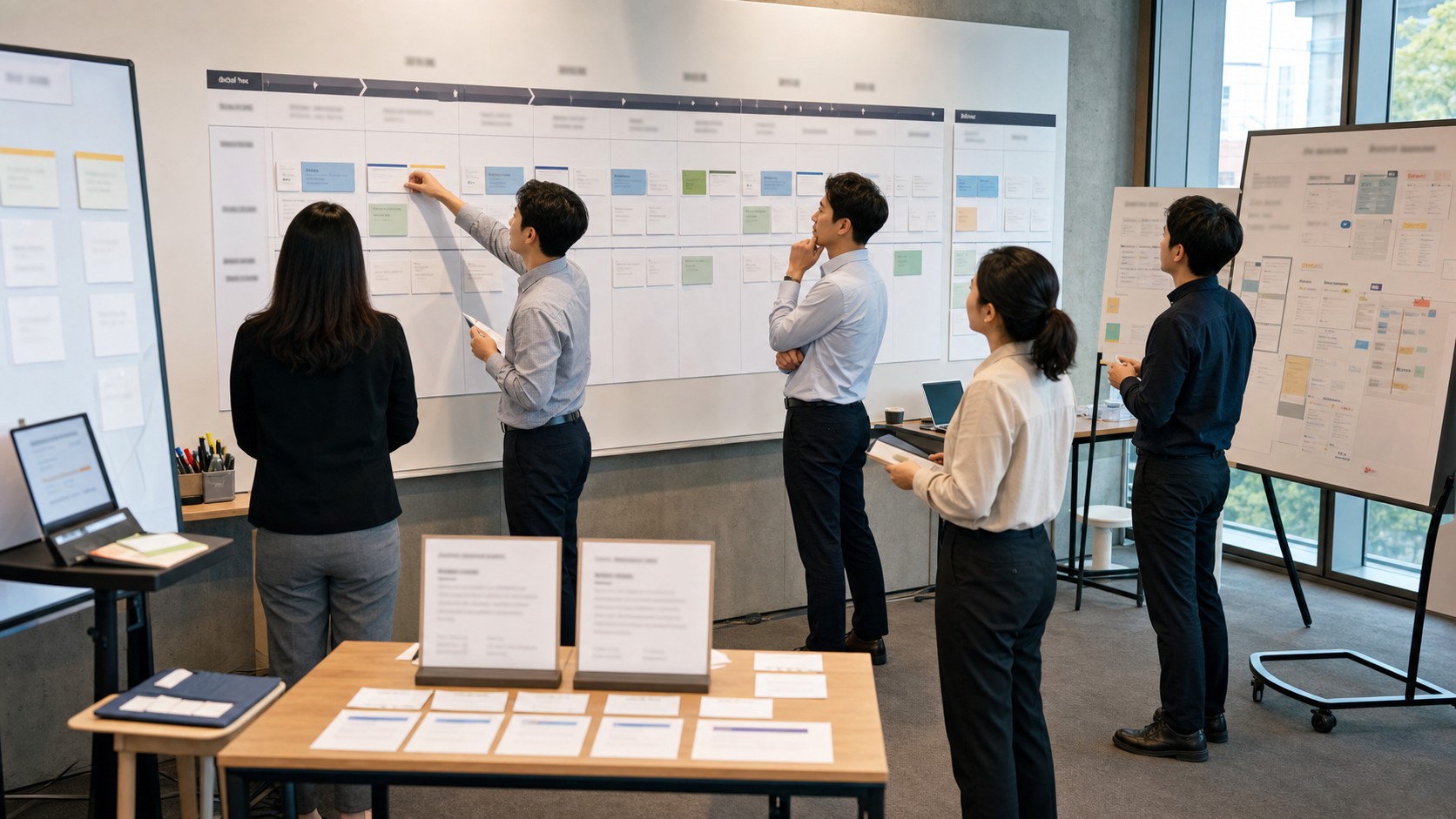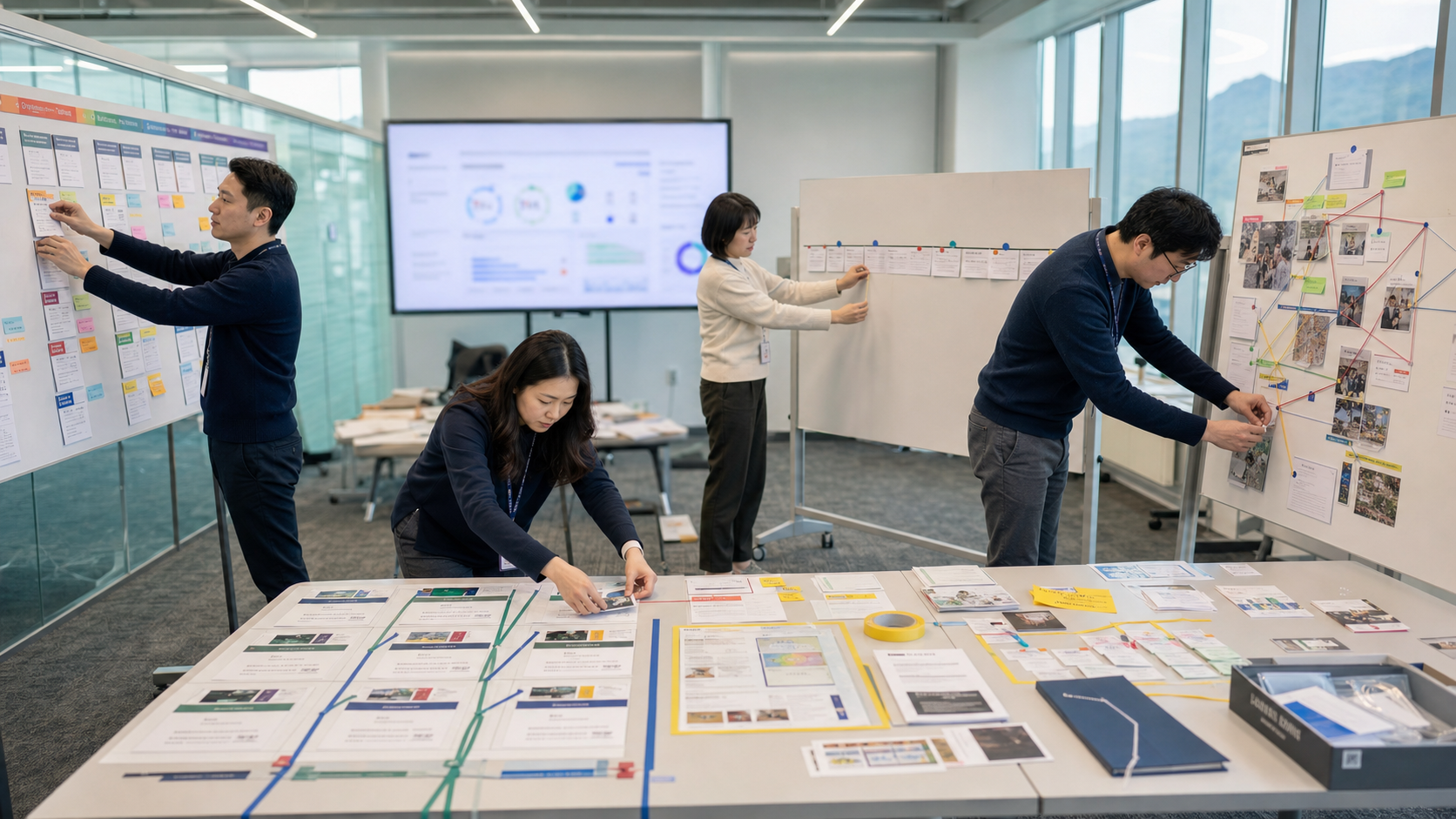
This is the fourth article in the 2026 HR Trend series. If the previous articles covered AI accountability lines and the redesign of performance management, this article is about recruiting. The central question for recruiting in 2026 is not ‘How fast can we screen with AI?’ but ‘By what criteria should we evaluate people?’
Recruiting automation can speed up resume review, candidate classification, and interview question generation. But if job requirements are outdated and skills criteria are vague, automation will not solve recruiting problems; it will make organizations repeat the same problems faster.
Hiring difficulties are not a problem of screening speed, but of criteria
The SHRM 2026 Talent Trends summary includes a sample of more than 2,000 HR professional respondents and addresses hiring difficulties and skills shortages together. According to the public summary, about 70% of HR professionals still struggle with full-time hiring, and 42% experienced difficulty retaining full-time employees during the past 12 months.
These figures show that recruiting is not simply a matter of job-posting exposure or resume review speed. If the people needed are scarce in the market and even hired employees are hard to retain, the recruiting criteria themselves must be reviewed. The issue becomes less about ‘finding good people quickly’ and more about ‘accurately defining the skills our organization needs.’
Automation can repeat vague requirements faster
SHRM 2026 HR Trends raises the concern that recruiting problems cannot be solved by automation and algorithms alone. Even if AI quickly summarizes applications and ranks candidates, if the input job requirements and evaluation criteria are vague, the results will also be vague.
For example, a job posting may say ‘communication skills,’ but in practice it is often unclear whether that means customer response, stakeholder coordination, document writing, or conflict mediation. AI can make such expressions look cleaner, but it cannot define on behalf of the organization the performance behaviors it wants.
Skills criteria must change job requirements, interviews, and internal development together
The SHRM 2026 Talent Trends summary states that 41% of HR professionals train current employees for roles that are difficult to fill. If hiring difficulties continue, it becomes hard to secure needed capabilities through external hiring alone, and internal development and recruiting criteria must move together.
Skills-based hiring is not simply about reducing education or experience requirements. It means defining the skills actually required for job performance, deciding how to verify those skills, and connecting missing skills to pathways for development after hiring. So, job requirements, interview questions, work-sample assessments, onboarding, and training plans must use the same language.
Recruiting teams and HRD must use the same skills language
If roles are divided so that recruiting teams screen candidates and HRD handles training after hiring, skills criteria become disconnected. Skills considered ‘essential’ during recruiting may be interpreted differently in onboarding and training, or capabilities that training aims to develop may not be reflected in hiring criteria.
What recruiting operations need in 2026 is a shared skills language used by both recruiting teams and HRD. Organizations must distinguish core skills by role, skills that must be confirmed before hiring, skills that can be developed within three months after joining, and skills that should be cultivated over the long term. Only then can recruiting automation connect to workforce planning rather than remain simple filtering.
Korean companies should review role-based skills maps before applicant scorecards
In Korean companies, recruiting improvement often begins with replacing the applicant tracking system, introducing AI resume screening, or improving interview evaluation forms. But what is needed before that is a role-based skills map. For each role, companies should separate the skills currently needed from those that will become important and decide what evidence will confirm each skill.
First, job-posting qualifications should be broken down into skill units. Second, interview questions should be checked to see whether they verify actual skills. Third, internal and external candidates should be comparable using the same skills language. Fourth, missing skills should not be treated only as recruiting failures; companies should judge whether they can be supplemented through onboarding and training.
The success or failure of recruiting automation is not determined only by the sophistication of algorithms. The criteria to be automated must be accurate. The starting point for recruiting in 2026 is not faster screening, but more precise skills criteria.
Read the HR Trend series together
This article is part of the 2026 HR Trend series. Reading across AI adoption, accountability lines, performance management, recruiting, upskilling, hybrid workforce models, Polywork, and employee experience gives a more three-dimensional view of how the HR operating model is changing.
- ① What must change before AI is the way HR operates
- ② More important than AI adoption rates: designing HR’s AI accountability lines
- ③ The end of annual reviews: redesigning performance management in the age of AI coaching
- ④ The skills criteria that must change before recruiting automation (current article)
- ⑤ Real-time upskilling: HRD must design the flow of work
- ⑥ The limits of full-time-employee-centered HR and hybrid workforce operations
- ⑦ Polywork and the spread of side jobs: redesigning rewards and engagement strategy
- ⑧ Burnout and employee experience: the psychological contract HR must rewrite
What HR should look at next
The point is not to add one more policy. The work ahead is to turn this issue into a clear operating standard for the organization.
A practical starting question is enough: which decision will this change actually alter — hiring, performance management, learning, or rewards? The clearer that answer becomes, the closer HR work moves from reports to real standards used in the field.
References
This article was written based on SHRM’s 2026 Talent Trends, 2026 HR Trends, and 2026 HR trend commentary. Only figures and wording available in public materials were used as evidence in the body, and non-public content from member-only detailed reports was not cited.