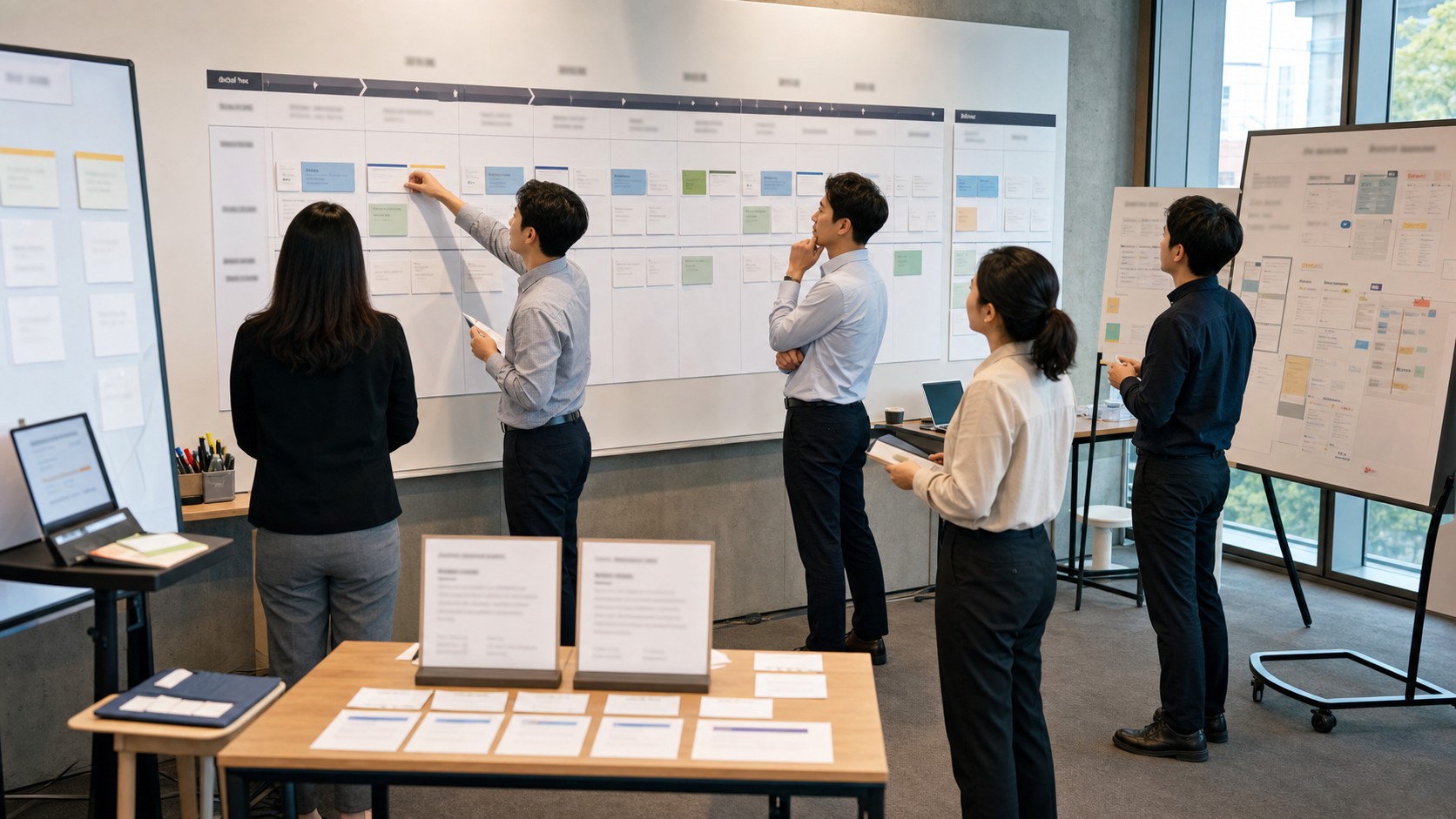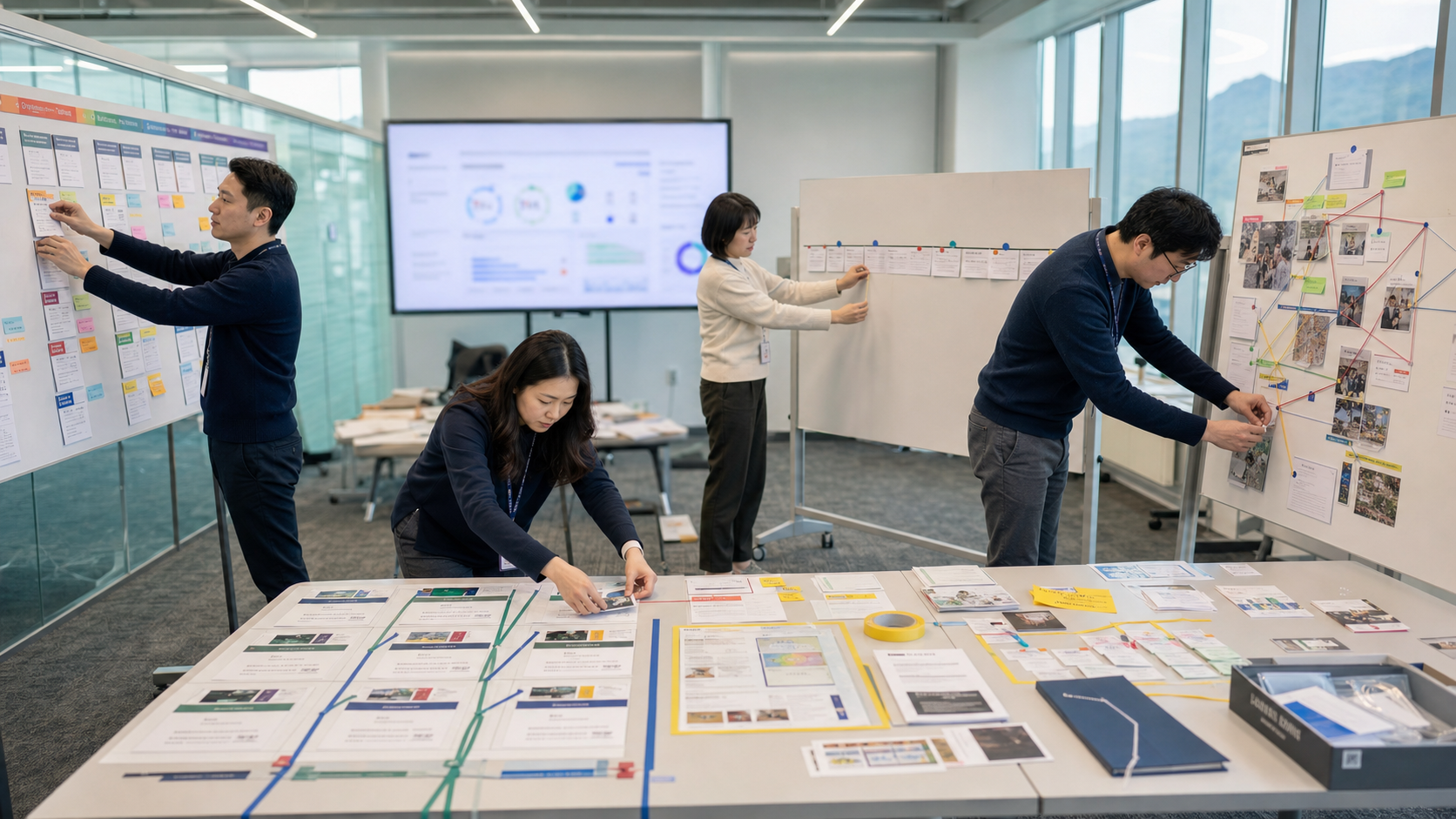
Installing AI tools is not the same as people actually changing how they work. Aon’s June 17 article makes that gap quite clear. It notes that nearly three-quarters of organizations worldwide have deployed AI or are running pilots, while only 18% of organizations have most employees participating in AI reskilling and upskilling.
That number signals that HR teams need to change the first question they ask about AI projects. The question should not start with “which tool did we introduce?” It should start with “who learned it, which work changed, and is that change visible in performance indicators?” Even when adoption rates are high, low learning participation and weak operating standards reveal the bottleneck inside the HR operating model.
The gap between deployment and learning participation appears first
Aon’s insight dated June 17, 2026 explains that AI deployment and pilot programs are already widespread. In numerical terms, nearly three-quarters of organizations worldwide have deployed AI or are testing it. From the employer perspective, it also says that more than three-quarters have already rolled out AI tools. On the surface, AI transformation looks fast.
But the second number in the same material is more uncomfortable. Only 18% of organizations have most employees participating in AI reskilling and upskilling. The gap between deployment and learning participation is not simply a delayed training schedule. It may mean that HRD budgets, job-based priorities, manager roles, and work redesign are not connected on the same operational view.
Counting usage frequency alone does not show the return on AI investment
Aon points out that AI use is still often measured by “frequency of use.” How many people logged in, how many prompts were entered, and which teams used tools most frequently can work as early diffusion indicators. But those indicators alone cannot show whether hiring lead time, training conversion rates, customer response quality, document review time, or the speed of managerial decision-making have improved.
Training coverage shows the same problem. Aon wrote that fewer than one-third of employers have failed to train even 10% of their workforce, and that one in six has not trained any employees at all. If an AI project meeting ends after reviewing only “number of users,” this gap remains hidden. HR needs to connect training audiences, job groups, use cases, and before-and-after performance indicators.
HRD and People Analytics need to look at the same dashboard
AI training is now difficult to run as a standalone campaign. The 18% participation figure is not only an HRD issue. It is an operating indicator that People Analytics, HRBPs, IT, and business leaders need to review together. For example, organizations should not look only at training completion rates. They should also place next to them the share of work actually using AI after training, the number of approved use cases, and the number of processes that have completed risk review.
John McLaughlin said that organizations are deploying AI but are not providing enough clarity, direction, and operating model support for people to use it effectively. That sentence can be read as a checklist for the HR operating model. Are there job-specific standards for AI use? What outputs should managers approve? What should be compared 30, 60, and 90 days after training? Without these questions, AI use is left to individual curiosity.
The next question for Korean companies is readiness, not tools
Aon’s material is written from a global consulting perspective, so it does not replace explanations of Korean companies’ legal obligations or industry-specific rules. In this automated run, the sample, survey scope, and industry distribution of respondents were not checked in detail, so the figures should be read as signals for workforce-readiness diagnosis. Still, there is a warning HR practitioners can apply: if AI transformation is treated only as a solution deployment project, training, roles, performance measurement, and accountability structures will not catch up.
In the next AIHR meeting, it may be better to open a readiness table before reviewing the feature list. HR should check, line by line, training participation by job group, actual applied work, manager approval standards, prohibited use cases, performance indicators, and data-security review status. If the tools are already inside the organization, the question needs to be asked before it is too late: are we increasing the number of people who use AI, or are we redesigning work that can actually use AI?
What HR should look at next
The point is not to add one more policy. The work ahead is to turn this issue into a clear operating standard for the organization.
A practical starting question is enough: which decision will this change actually alter — hiring, performance management, learning, or rewards? The clearer that answer becomes, the closer HR work moves from reports to real standards used in the field.
References
- Aon, AI Isn’t the Differentiator. Workforce Readiness Is, 2026-06-17.