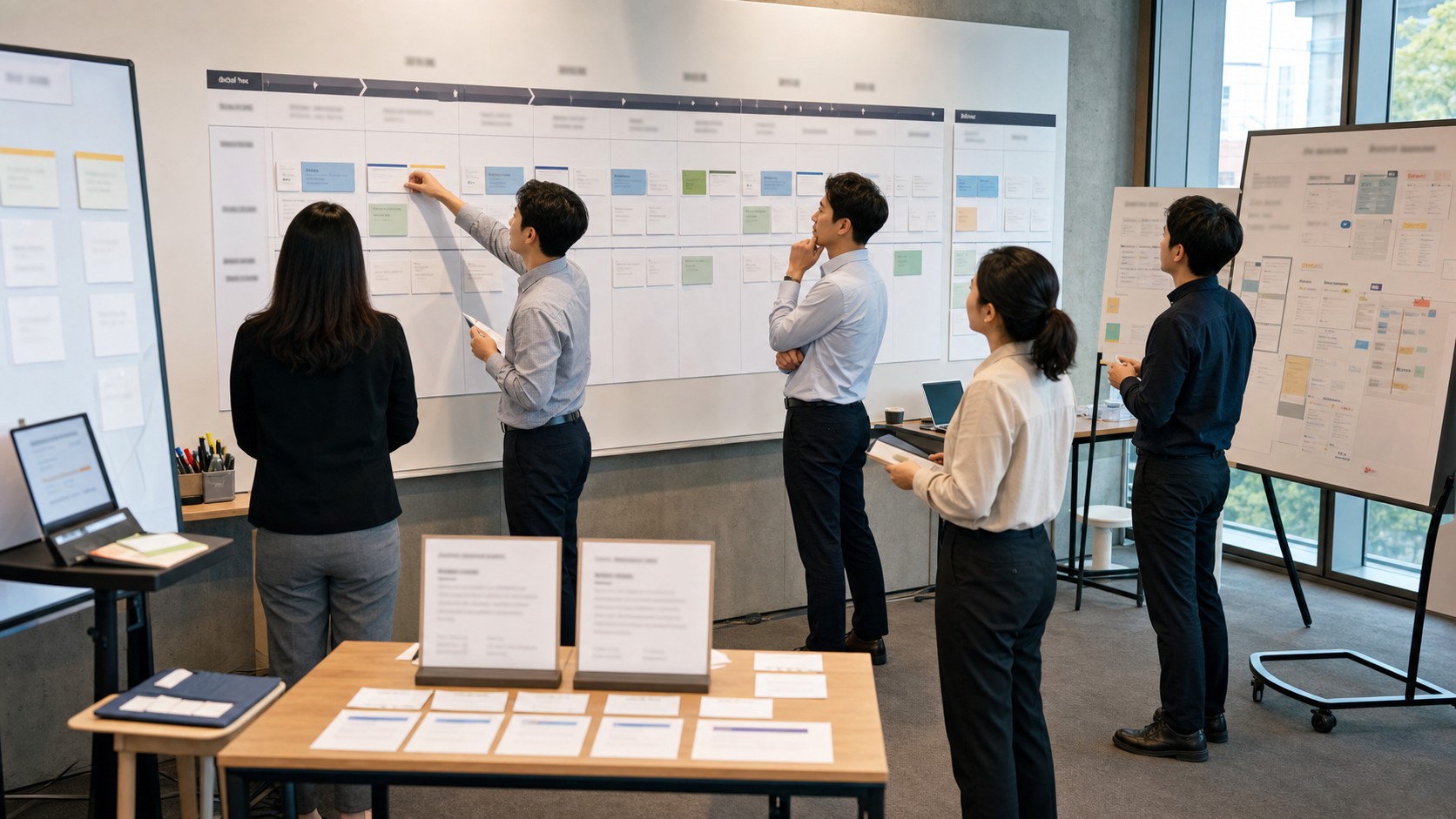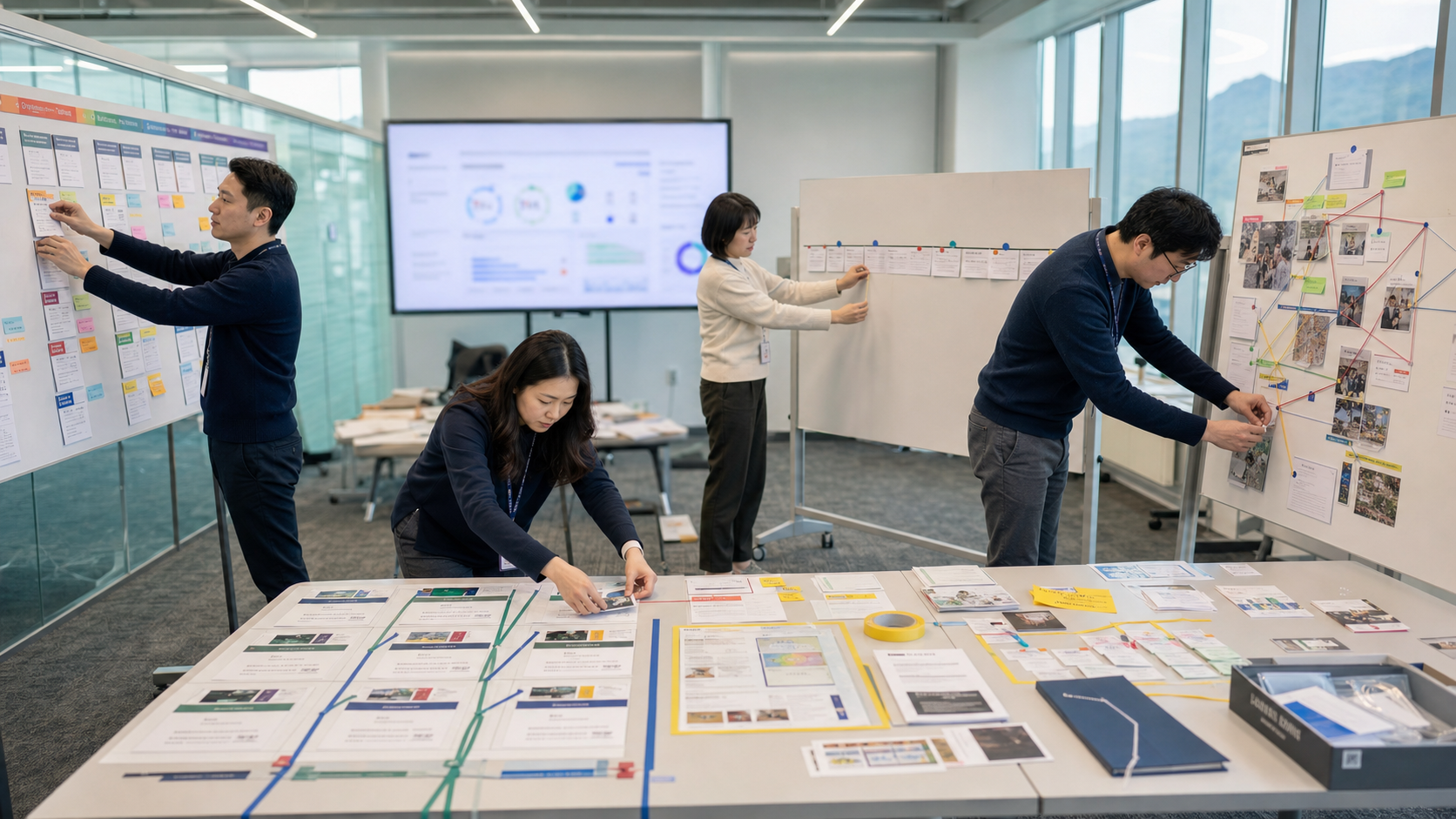
As AI and People Analytics spread, the discussion around performance management is also changing. The old way of having people write goals manually and compile achievement rates by hand at the end of the quarter is gradually losing its persuasive power. When collaboration tools, work records, customer data, and HR data are connected, the progress of goals can become visible more often, in greater detail, and more automatically.
But this does not mean the automation of OKRs. AI can suggest goal statements, and People Analytics can quickly show changes in metrics. However, what should be regarded as an important goal, which indicators should be accepted as evidence of performance, and how to interpret the causes of underachievement remain matters of organizational judgment. In the age of AI, OKRs are moving in a direction where the operating system for interpretation and accountability becomes more important than the technique of writing goals.
AI cannot decide OKRs for an organization, but it lowers the cost of collecting evidence
Google’s OKR Playbook explains that Key Results should describe outcomes, not activities, and that evidence of completion should be available, credible, and easily discoverable. It gives examples such as documents, notes, and published metrics reports. This principle becomes even more important in the age of AI and People Analytics.
AI can identify signals of goal progress from meeting minutes, project management tools, customer feedback, and work documents. Delay signals that previously could be known only when a leader asked directly can now appear earlier through data. People Analytics can show indicators related to turnover, engagement, collaboration, capabilities, and productivity at the organizational-unit level. The cost of collecting evidence goes down.
However, having more evidence is different from having better goals. Organizations must distinguish whether the signals found by AI represent actual performance or simply the volume of activity. The number of documents written, meeting attendance, and tickets processed are easy to measure. But improvements in customer experience, strategy execution, and the accumulation of organizational capabilities require more careful interpretation. AI can gather evidence, but people must review what that evidence means.
The stronger People Analytics becomes, the stricter Key Results become
People Analytics is a powerful foundation that enables HR to make decisions based on data rather than intuition. AIHR describes People Analytics as a data-driven HR capability and presents types of analytics such as descriptive, diagnostic, predictive, and prescriptive analytics. As this trend grows stronger, OKR Key Results become stricter.
For example, under an Objective such as “strengthen leadership training,” if “conduct five training sessions” is set as a Key Result, AI and data tools can easily track that activity. But it is still an activity metric. As in the principle of Google’s playbook, Key Results should be outcomes, not activities. Organizations need to consider metrics closer to outcomes, such as “the rate at which new leaders hold one-on-one meetings with team members within 60 days,” “retention rate of key talent,” “project decision-making lead time,” and “recurrence rate of customer complaints.”
When there is more data, ambiguous goals are exposed more quickly. OKRs that have not defined what to measure cannot be placed on a dashboard. Conversely, if an organization sets goals only around what is easy to measure, it may miss important changes. Designing Key Results in the age of People Analytics is not about attaching numbers. It is about translating the outcomes the organization truly wants to change into the language of data.
Monthly check-ins become interpretation meetings, not data dashboards
Atlassian recommends that OKR operations score, analyze, and summarize every month. When AI and People Analytics are combined, monthly check-ins have more data. Progress rates, workloads, collaboration networks, employee experience, customer responses, and issue-delay signals can all be gathered on one screen.
Even so, check-ins should not end as dashboard reviews. CIPD explains that effective HR decision-making should be based on a combination of the best available evidence and critical thinking. Evidence helps judgment, but it does not replace judgment. What data tells us is closer to “what happened.” What leaders and HR need to ask is “why did this happen, and what will we change now?”
So, OKR check-ins in the age of AI should become meetings for interpretation, not meetings for reading numbers. If an indicator has worsened, the meeting should focus on sharing causes rather than interrogating the person in charge. It must distinguish whether the goal was designed poorly, whether resources were insufficient, whether interdepartmental dependencies remained unresolved, or whether market conditions changed. Data is the starting point of the meeting, not its conclusion.
As data increases, HR’s question shifts from performance to accountability
As AI and People Analytics spread, HR can see more performance signals. But as signals increase, new risks also emerge. These include mistaking the volume of individual activity for performance, treating only measurable indicators as important, or connecting data to evaluation and rewards when data quality is low.
Google’s OKR Playbook explains that well-run OKRs clarify what is important, what should be optimized, and what tradeoffs should be made. This principle applies equally in the data era. HR’s question must not stop at “who is performing well?” It must shift to “what are we optimizing for which goal?”, “if we raise this metric, will other important values be damaged?”, and “is this result the outcome of individual effort, or of the system and resource allocation?”
In Korean companies in particular, data can quickly be linked to evaluation and compensation. That is why HR must first define the boundaries of data use. OKR progress data can serve as reference material for performance conversations, but it is risky for it to become an evaluation formula as is. AI-generated summaries should also be presented with reviewable evidence. The more data there is, the more responsible rules of interpretation are needed.
In the age of AI, OKRs need operating governance more than automation tools
The AI Index states that its purpose is to track, collect, organize, and visualize AI-related data to help policymakers, researchers, business leaders, and the public understand AI. This trend also has implications for HR. Performance management will handle more data going forward. But the more data there is, the more organizations must decide what to measure, who can access it, and what decisions it will be used for.
OKR operations in the age of AI require at least three types of governance. First is a quality standard for goal data. Organizations must decide which indicators will be accepted as Key Results and which data will be used only as reference. Second is a standard for interpretation authority. Organizations must decide who will interpret AI summaries, dashboards, and People Analytics results, and in which meetings those interpretations will be finalized. Third is a standard for connection to evaluation and rewards. Organizations must separate how far OKR data serves as evidence for performance conversations and from what point it becomes material for compensation judgments.
For example, it is risky to interpret the number of messages in collaboration tools or meeting attendance rates directly as “engagement” or “collaboration performance.” Conversely, indicators connected to work outcomes, such as customer response time, reduction in recurring complaints, and decision-making lead time for key projects, can be good starting points for OKR interpretation. HR must consider not the convenience of indicators, but their relevance to outcomes, privacy and labor risks, and explainability to employees.
The starting point of this OKR series was the recognition that OKRs are not a goal-management template but an operating system for performance management. In the age of AI and People Analytics, this perspective becomes even more important. AI can create goal statements more quickly. Systems can show progress rates more often. But what the organization chooses, what it gives up, and what evidence it recognizes as performance are not automated.
Ultimately, OKRs in the age of AI are not a matter of technology adoption. They are a matter of organizational operations that responsibly interpret more data. HR’s role also shifts from tool administrator to designer of the language of performance. We are not entering an era in which AI manages goals on behalf of organizations, but an era in which organizations must make more sophisticated judgments around the evidence that AI reveals.
What HR should look at next
The point is not to add one more policy. The work ahead is to turn this issue into a clear operating standard for the organization.
A practical starting question is enough: which decision will this change actually alter — hiring, performance management, learning, or rewards? The clearer that answer becomes, the closer HR work moves from reports to real standards used in the field.