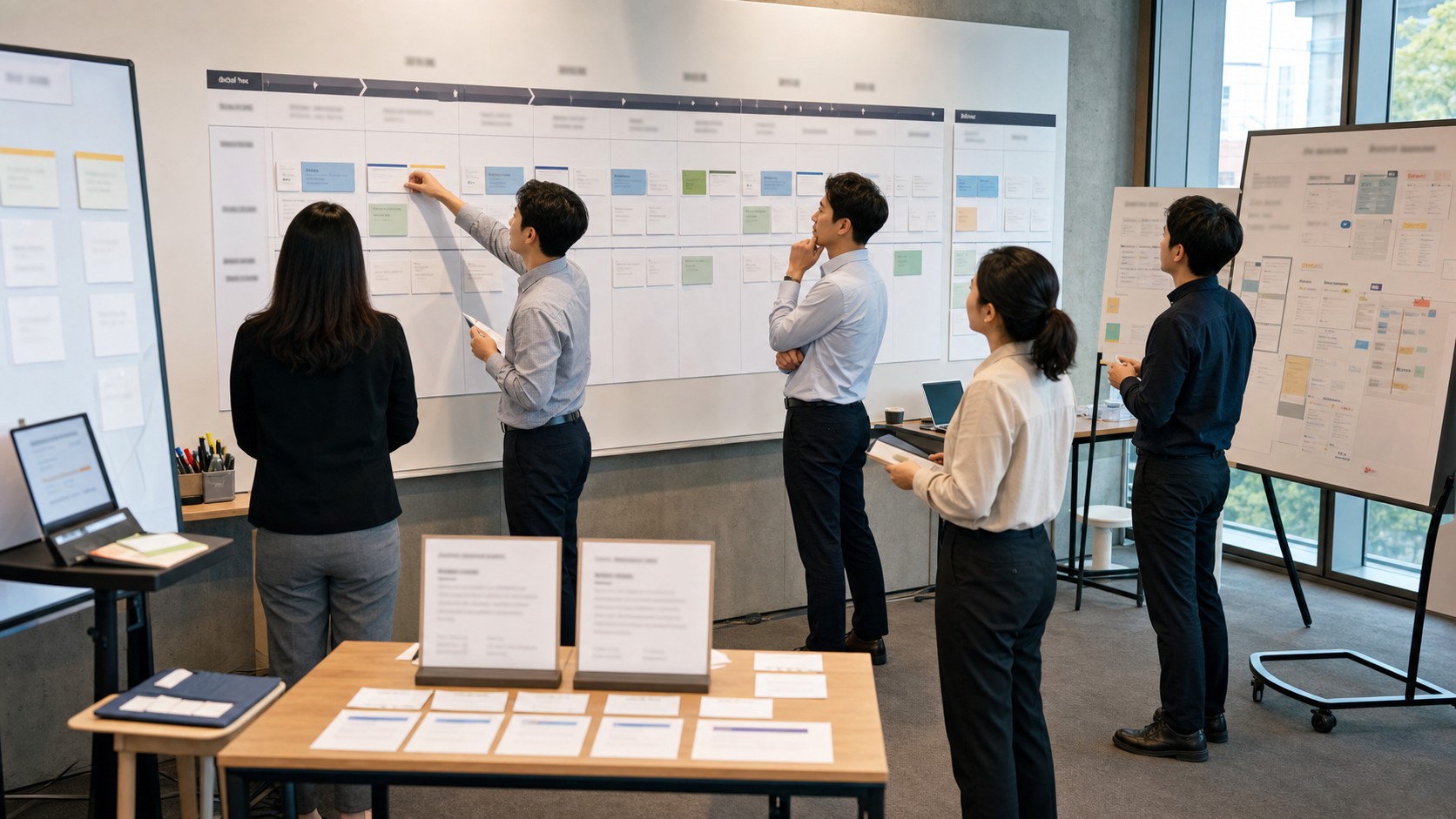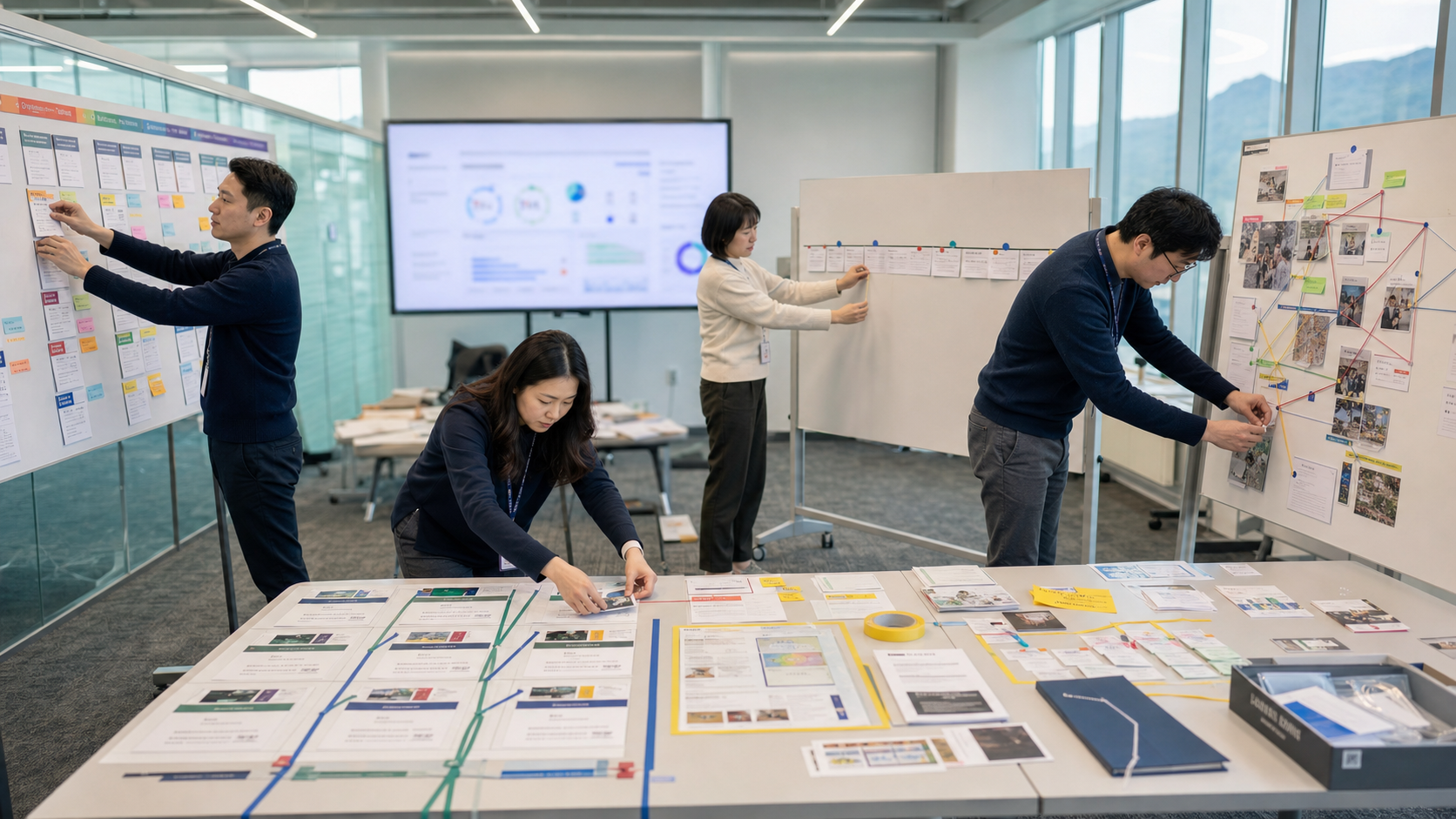
Deloitte Insights’ 2026 Global Human Capital Trends shifts the AI discussion away from technology purchasing or productivity tools and toward the redesign of work. One finding is especially hard for HR to ignore: among the 100 C-suite leaders surveyed, 59% take a technology-centered approach to AI, and those organizations are 1.6 times more likely than human-centered organizations to fail to achieve AI investment returns that exceed expectations. In other words, AI performance is determined less by adoption rates than by the structure of work.
A 59% technology-centered approach exposes the blank spaces in AI investment review sheets
In Deloitte’s survey of 100 C-suite leaders, 59% of organizations approach AI from a technology-centered perspective. The same source explains that technology-centered organizations are 1.6 times more likely than human-centered organizations to fall short of AI investment returns that exceed expectations. This figure is not simply a warning label in AIHR budget reviews. It is a signal that performance measurement itself is incomplete unless organizations ask how purchased tools will change work judgment, approvals, collaboration, and learning.
HR therefore needs to change its AI adoption review sheet. Comparing only feature lists and license costs is not enough. The same table should include the roles that will use the tool, data access rights, reviewers of outputs, error-reporting methods, training audiences, and whether performance indicators will change. The 1.6-times figure points not only to the technology team’s performance but also to HR’s responsibility for operating-model design.
Advantage comes from real-time orchestration of people, skills, and data, not static placement
Deloitte’s original report explains that as AI accelerates work, competitive advantage is moving from static talent allocation to the real-time orchestration of people, skills, data, and technology. This sentence is about a change in operating rhythm rather than an organizational-chart redesign. Annual workforce planning, semiannual capability diagnostics, and quarterly training applications alone cannot keep pace with changing work demand.
In HR practice, the first thing to check is the refresh cycle for skills data. HR should examine which roles use which tools, whether internal mobility candidates can be identified within days when new work emerges, and whether project staffing is captured in performance management and learning records. Orchestrating people, skills, and data in real time is a demand to change data quality and decision-making cycles before introducing another platform.
HR functions are reassembled as outcome-centered capability bundles, not silos
The report says traditional functions such as HR, finance, and IT are slow and siloed for today’s business needs. The same section also raises the need to deconstruct and reassemble functions into outcome-centered capabilities. From HR’s perspective, this means that a model in which recruiting, learning, performance, and HRIS teams each execute only their own annual plans may clash with how work changes in the AI era.
For example, if an organization introduces customer-service AI, recruiting cannot look only for prompt-writing experience. Learning also cannot stop at teaching people how to use the tool. Performance management must decide how to evaluate AI-generated drafts and human-revised judgment. HRIS must retain logs and permissions data. If function-specific KPIs remain unchanged, one side of the organization will accelerate adoption while another handles risk after the fact.
Continuous learning is not a training course but adaptive capability inside the flow of work
Deloitte views traditional change management and training as potentially too slow to match the adaptation speed required of organizations and employees. The original report also adds that AI brings learning, adaptation, and skill application into the flow of work. This point expands HRD’s role from managing training application or completion rates to managing learning data generated while work is being done.
At the next quarterly HR meeting, three metrics are worth asking about. First, after an AI-related work change occurs, within how many days is the training content for that role updated? Second, is data captured on the guidance, coaching, and review procedures employees actually use in their work? Third, are new skills reflected in performance reviews and internal mobility decisions? The core message of 2026 Human Capital Trends is not to buy more AI. It is about how quickly organizations redesign the way people make judgments, learn, and collaborate.
What HR should look at next
The point is not to add one more policy. The work ahead is to turn this issue into a clear operating standard for the organization.
A practical starting question is enough: which decision will this change actually alter — hiring, performance management, learning, or rewards? The clearer that answer becomes, the closer HR work moves from reports to real standards used in the field.
Deloitte Insights, 2026 Global Human Capital Trends.